The Triple Threat: Why Hospitality Brands Need PR, Social Media, AND AI Strategy to Survive
Bottom Line: The hospitality industry has always been about creating memorable experiences, but how guests discover those experiences has fundamentally changed. Today’s successful hotels and restaurants must master three interconnected disciplines: traditional PR, social media marketing, and AI optimization. Think of it as a three-legged stool—remove any one leg, and your marketing strategy collapses.
The Enduring Power of Traditional PR
Despite the digital revolution, traditional PR remains the cornerstone of hospitality marketing. Why? Because credibility never goes out of style. When a respected food critic writes about your restaurant in a major publication, or when a travel writer features your hotel in their “must-visit” roundup, you’re not just getting coverage, you’re getting validation.
This earned media creates a ripple effect that extends far beyond the original publication. A single review in a respected outlet can generate social media buzz, influence online reviews, and yes, even impact how AI systems understand and recommend your business. Traditional PR provides the authoritative content that both algorithms and humans trust.
Moreover, PR builds the narrative foundation that everything else builds upon. Your origin story, your chef’s philosophy, your unique amenities—these compelling narratives first crafted for traditional media become the content that powers your social media and helps AI systems understand what makes you special.
Social Media: The Visual Showcase That Drives Action
While PR builds credibility, social media drives action. In the hospitality industry, where experiences are inherently visual and emotional, platforms like Instagram, TikTok, and Facebook serve as your digital storefront. With 82% of restaurants using social media as their primary marketing tool, it’s essential.
Social media offers something traditional PR cannot: immediate, two-way communication with your audience. When a guest posts about their incredible meal, you can respond in real-time, turning a single positive experience into a public conversation that influences others. This authentic engagement builds community around your brand in ways that traditional advertising never could.
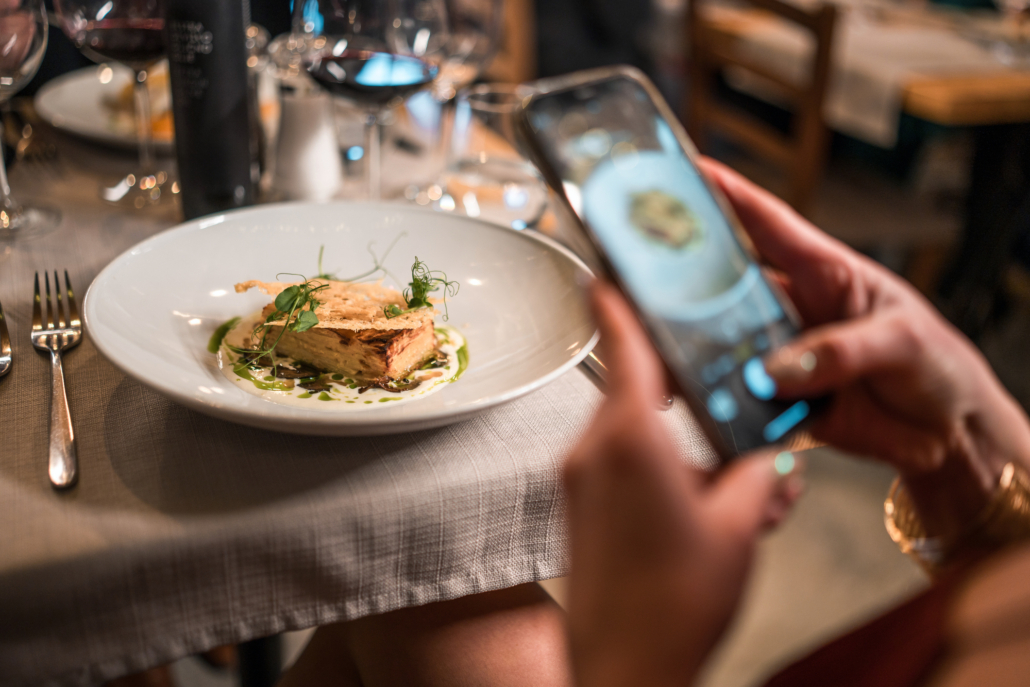
The visual nature of social media is particularly powerful for hospitality brands. A perfectly plated dish, a sunset view from your hotel balcony, or the ambiance of your dining room tells your story more effectively than any written description. These visual stories don’t just attract bookings—they set expectations and create anticipation that enhances the actual guest experience.
But here’s what many hospitality brands miss: social media content doesn’t exist in a vacuum. Every post, story, and interaction becomes part of your digital footprint that AI systems analyze when making recommendations. That Instagram post about your signature cocktail might be exactly what prompts ChatGPT to recommend your bar to someone planning a night out.
The AI Revolution: The New Gatekeeper
The emergence of AI-powered search and recommendation systems represents the most significant shift in how people discover hospitality experiences since the rise of online reviews. With 60% of leisure travelers under 45 using AI for travel planning, and 75% of travelers trusting AI for accommodation decisions, these systems have become the new gatekeepers of hospitality discovery.
Unlike traditional search engines that rely primarily on keywords and links, AI systems analyze the full spectrum of your digital presence. They consider your website content, social media activity, online reviews, earned media coverage, and even mentions in forums like Reddit. This holistic analysis means that your PR efforts, social media strategy, and AI optimization must work together seamlessly.
Consider this scenario: A potential guest asks ChatGPT to recommend a romantic restaurant in your city. The AI system draws from restaurant websites, food critic reviews, Instagram posts, TripAdvisor comments, and local blog coverage to make its recommendations. If your restaurant has strong traditional PR coverage, active social media presence, and optimized digital content, you’re likely to make the list. If you’re missing any of these elements, you might not even be considered.
The Synergy Effect: How All Three Work Together
The magic happens when PR, social media, and AI strategy work in harmony. Here’s how the synergy plays out:
PR amplifies social media: When you receive traditional media coverage, it provides credible content to share across your social channels, extending the reach and impact of that coverage.
Social media humanizes PR: While PR builds credibility, social media adds personality and relatability. The combination creates a more complete brand story that resonates with different audience segments.
Both feed AI systems: Every piece of earned media and every social media post becomes data that AI systems use to understand your brand, your offerings, and your reputation. This comprehensive digital footprint is what determines whether you appear in AI-generated recommendations.
AI insights improve both PR and social strategy: AI tools can analyze which topics generate the most engagement, identify trending conversations in your market, and even predict which story angles are most likely to resonate with journalists and social media audiences.
The Cost of Incomplete Strategy
The hospitality brands that will struggle in the coming years are those that treat these three areas as separate, unrelated activities. The restaurant that gets great press coverage but ignores social media misses opportunities to amplify and extend that coverage. The hotel with beautiful Instagram content but no PR strategy lacks the credibility markers that influence both journalists and AI systems. The brand that focuses only on AI optimization without building genuine social media engagement and earning quality press coverage will find their AI visibility hollow and unsustainable.
Building Your Triple Threat Strategy
Success requires viewing PR, social media, and AI as interconnected parts of a unified strategy:
Start with story: Use PR principles to develop compelling narratives about your brand, then adapt these stories for social media and ensure they’re discoverable by AI systems.
Create content that serves multiple purposes: A behind-the-scenes video of your chef preparing a signature dish can be pitched to food writers, shared on social media, and optimized for AI discovery.
Monitor your full digital footprint: Track not just traditional media mentions and social media metrics, but also how your brand appears in AI-generated recommendations and responses.
Invest in quality across all channels: Half-hearted efforts in any area can undermine your entire strategy. AI systems, in particular, are sophisticated enough to recognize and elevate brands with consistently high-quality, authentic digital presence.
The Future is Integrated
The hospitality brands that thrive in the next decade will be those that master the art of integrated marketing—where traditional PR builds credibility, social media creates community, and AI optimization ensures discoverability. These aren’t competing strategies; they’re complementary forces that, when properly aligned, create marketing power greater than the sum of their parts.
The question isn’t whether to invest in PR, social media, or AI strategy. The question is how quickly you can integrate all three into a cohesive approach that positions your brand for success in an increasingly complex digital landscape.
Your guests are already using AI to discover experiences, engaging with brands on social media, and trusting traditional media for validation. The only question is whether you’ll be there when they do.